Service One
Short blurb.
Service Two
Short blurb.
Service Three
Short blurb.
Short blurb.
Short blurb.
Short blurb.

We’d love to hear from you! Whether you have a question about Helen’s Honey, want to know what’s happening in the apiary, or simply want to talk about bees, feel free to get in touch. Beekeeping has become a family adventure for us, and one of the most enjoyable parts has been sharing what we’re learning with friends, neighbors, and others who are curious about honey bees.
Interested in our honey? Because we maintain only a small number of hives, the amount available will vary from season to season—and sometimes the bees need everything they produce. When we do have surplus honey available, we’ll share updates here on the website. Send us a message using the contact form below, and we’ll get back to you as soon as we can.

At Helen’s Honey, we’re learning the art and science of beekeeping one season at a time. Our small family apiary is home to two growing honey bee colonies that we care for throughout the year. From feeding and inspecting the hives to managing their space, health, and winter preparations, our goal is simple: give our bees the best possible environment to thrive while learning more about these remarkable pollinators along the way.
Of course, healthy bees sometimes reward their keepers with something pretty special—honey! We allow our colonies to keep the stores they need first, harvesting only the surplus honey they can spare. Our honey is produced by bees foraging throughout the surrounding fields, woods, gardens, and countryside of Northern Virginia. Helen’s Honey may be a small backyard operation, but every jar represents thousands of miles flown, millions of flowers visited, and an incredible amount of work by our bees.
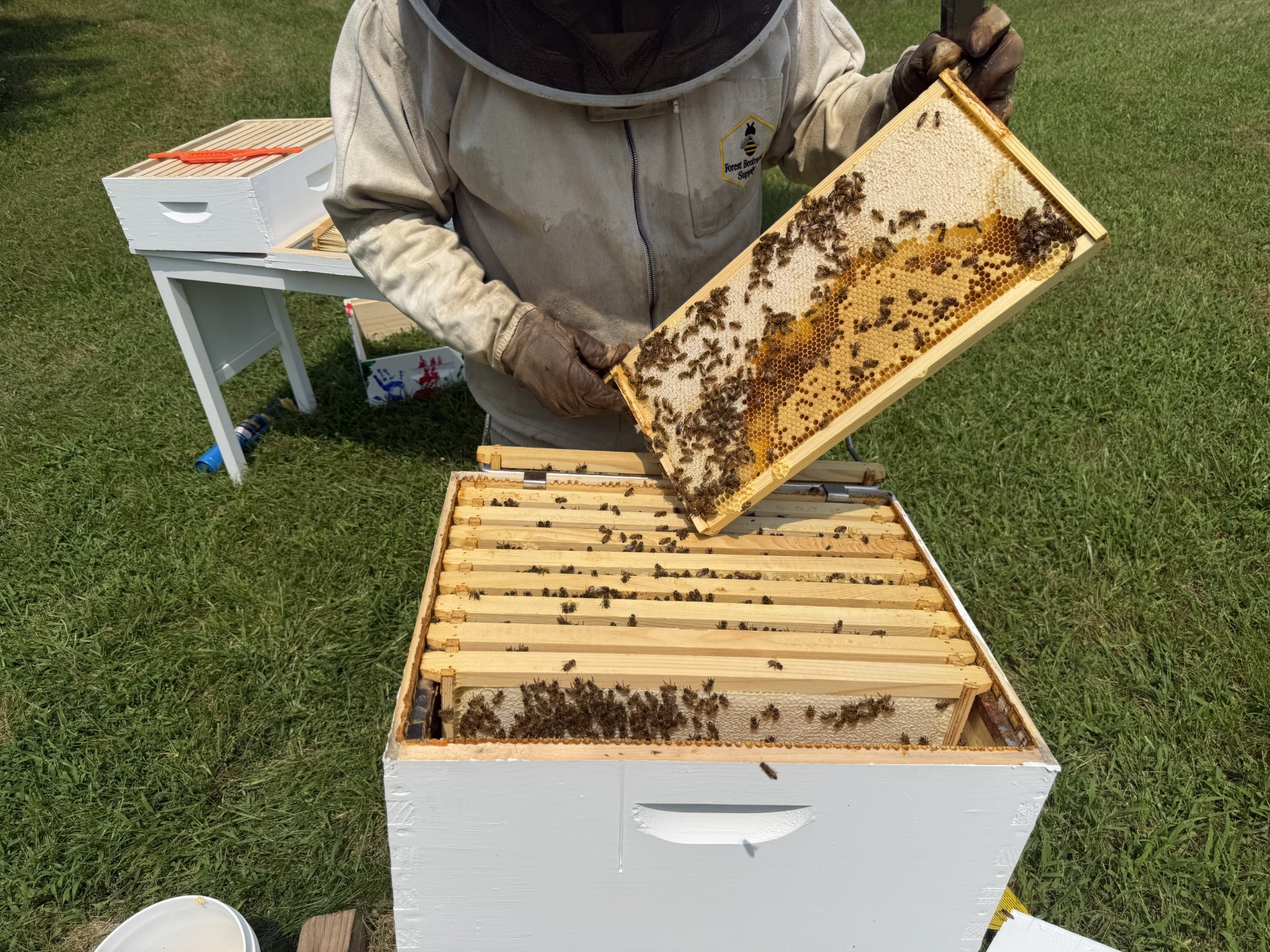
What started as an experiment in beekeeping has quickly grown into a small family apiary. Over the past four months, we established our first colony in our painted handprint hive and later added a second colony after capturing a local swarm. Both colonies have grown into two deep brood boxes, drawing out frame after frame of new comb. Along the way, we’ve learned how to feed growing colonies, inspect frames, use a smoker, recognize brood and honey stores, manage hot-weather bearding, deal with ants, and expand the hives as the colonies grew. During some of the hottest days of the Virginia summer, we even added removable umbrellas to provide afternoon shade while still allowing the hives to receive morning sun.
Perhaps the biggest surprise has been how quickly the bees have progressed. Our original painted hive has become particularly strong, while the swarm colony has steadily caught up. Both now have queen excluders and honey supers, and the bees have been busy drawing fresh wax and storing honey above their brood chambers. We began the season expecting that our first year would simply be about establishing two healthy colonies and preparing them for winter, but we may actually end up with our first small honey harvest. With approximately 18 honey-super frames now in various stages of being filled, our first jars of Helen’s Honey may arrive sooner than we ever expected. More importantly, these first four months have given us an incredible opportunity to learn about honey bees, involve the family, make a few mistakes, and watch two colonies grow from their beginnings into thriving hives.